Johann Christian Bach 5 September 1735 – 1 January 1782
Cello Concerto in C minor W C77

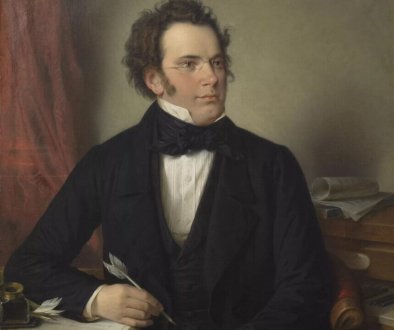
By Thomas Gainsborough – one or more third parties have made copyright claims against Wikimedia Commons in relation to the work from which this is sourced or a purely mechanical reproduction thereof. This may be due to recognition of the “sweat of the brow” doctrine, allowing works to be eligible for protection through skill and labour, and not purely by originality as is the case in the United States (where this website is hosted). These claims may or may not be valid in all jurisdictions.As such, use of this image in the jurisdiction of the claimant or other countries may be regarded as copyright infringement. Please see Commons:When to use the PD-Art tag for more information., Public Domain, https://commons.wikimedia.org/w/index.php?curid=6365638
Johann Christian Bach was a German composer born on 5 September 1735, the youngest son of Johann Sebastian Bach. He received musical training from his father and half-brother, Carl Philipp Emanuel Bach, in Berlin. J.C. Bach later moved to Italy to study with Padre Martini in Bologna. He became an organist at Milan Cathedral and composed church music, including a Requiem Mass. In 1762, he moved to London, where he became known as “The English Bach” and wrote successful Italian operas.
He developed the sinfonia concertante form, influencing composers like Joseph Haydn and Wolfgang Amadeus Mozart. J.C. Bach taught Mozart during his visit to London, significantly impacting Mozart’s style. He established the Bach-Abel concerts with Carl Friedrich Abel, making classical music accessible to the middle class. Despite his success, J.C. Bach faced financial difficulties later in life. He died on 1 January 1782, leaving behind a rich legacy of compositions, including operas and orchestral works, that shaped the Classical music era.