Samuel Barber 9 March 1910 – 23 January 1981
Adagio For Strings
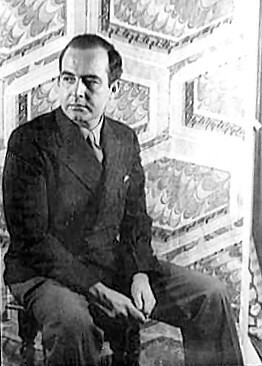
By Carl Van Vechten – This image is available from the United States Library of Congress’s Prints and Photographs divisionunder the digital ID van.5a51697.This tag does not indicate the copyright status of the attached work. A normal copyright tag is still required. See Commons:Licensing., Public Domain, https://commons.wikimedia.org/w/index.php?curid=52003
Samuel Barber was an American composer, pianist, conductor, baritone, and teacher, celebrated for music that largely favoured lyricism, emotional directness, and traditional tonal craft at a time when many composers pursued more experimental modernism. His formative training came from composition study at the Curtis Institute of Music, notably with Rosario Scalero, and long mentorship from his uncle, the song composer Sidney Homer. After 1940, Barber absorbed some modernist elements, including sharper dissonance and occasional tonal ambiguity, while keeping his characteristic melodic voice.
He wrote outstanding music across orchestral, chamber, and vocal genres, but vocal music dominates his catalogue, rooted in his own early career as a professional baritone and his lifelong sensitivity to text and the singing line. His best-known piece is Adagio for Strings (1936), later adapted as the choral Agnus Dei (1967). Other staples include Knoxville: Summer of 1915 (1947) and the Violin Concerto (1939). Barber won the Pulitzer Prize for Music twice: for the opera Vanessa (1958) and for the Piano Concerto (1962). He died of cancer in 1981.