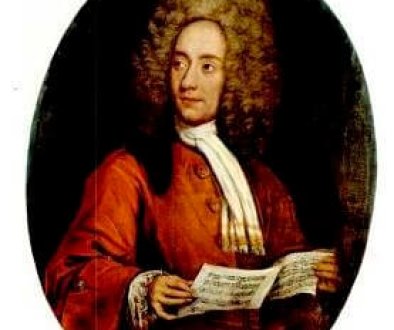
Antonio Vivaldi 4 March 1678 – 28 July 1741
Nisi Dominus IV: Cum Dederit

By Unidentified painter – (Old image: Taken from the en.wikipedia), Public Domain, https://commons.wikimedia.org/w/index.php?curid=10678
Antonio Lucio Vivaldi was an Italian Baroque composer, virtuoso violinist, and opera impresario, known for shaping the solo concerto into a dominant musical form. His influence spread widely across Europe during his lifetime, inspiring many imitators and advancing orchestration, violin technique, and programmatic music. Born in Venice, Vivaldi was baptised immediately after birth, likely due to fragile health. He trained for the priesthood from age 15 and was ordained in 1703, earning the nickname “il Prete Rosso” (“the Red Priest”) for his red hair. Much of Vivaldi’s career centred on the Ospedale della Pietà, an institution that educated girls in music. He taught and composed extensively for its musicians. His breakthrough came with the concerto collection L’estro armonico, published in 1711. In the 1720s, he composed his most famous work: The Four Seasons, which depicts vivid seasonal scenes, each linked to a descriptive sonnet. Vivaldi died in poverty in 1741, but his music experienced a revival in the 20th century. Today, The Four Seasons remains one of the most performed Baroque works.