June 8th: Tomaso Albinoni
Tomaso Albinoni 8 June 1671 – 17 January 1751
Adagio in G minor Arranged by Remo Giazotto
By anonymous – Unknown source, Public Domain, https://commons.wikimedia.org/w/index.php?curid=61401
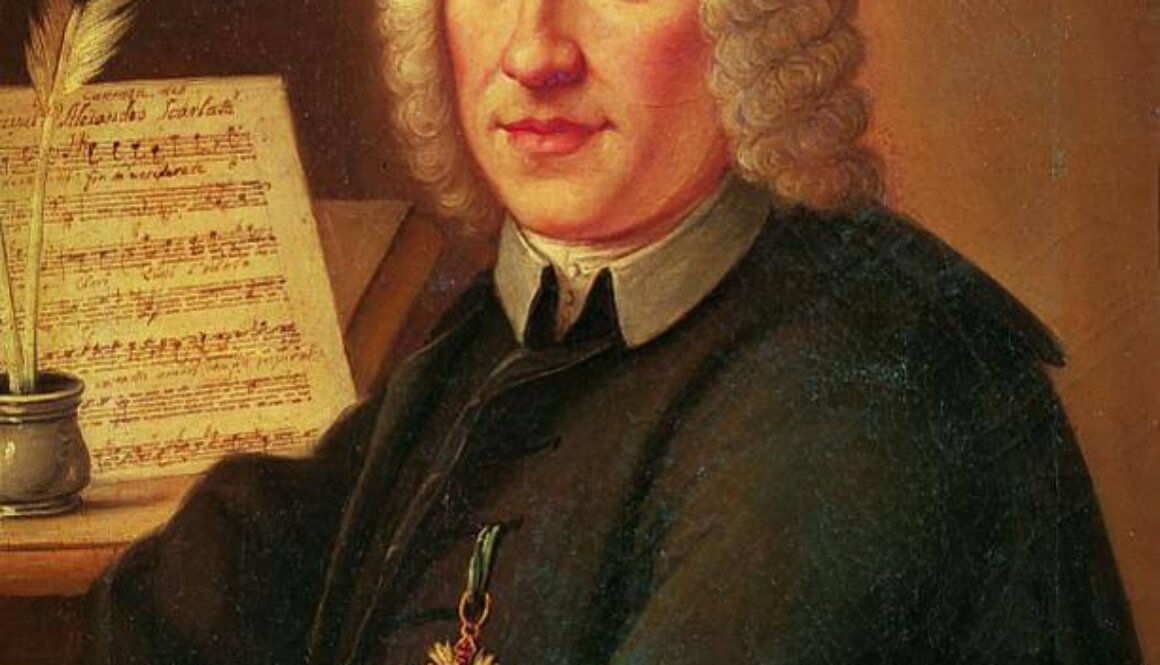
Alessandro Scarlatti was a renowned Italian composer born in 1660 in Palermo, Sicily. He is best known for his operas and sacred music, playing a significant role in the development of the Baroque style of music. Scarlatti created over 100 operas, many of which were performed in Naples, where he spent a large part of his life. His use of melodies and harmonies was groundbreaking, influencing many composers who followed him.
In addition to his operatic works, Scarlatti composed numerous cantatas, which are short vocal pieces often accompanied by instruments. He also made significant contributions to the development of the sonata and keyboard music, helping to shape the future of European classical music. Scarlatti’s music is characterised by its emotional depth and technical brilliance.
He passed away in 1725, but his legacy lives on. Today, many musicians still perform his works, and he is celebrated for his ability to blend drama and melody, leaving an indelible mark on the world of music.
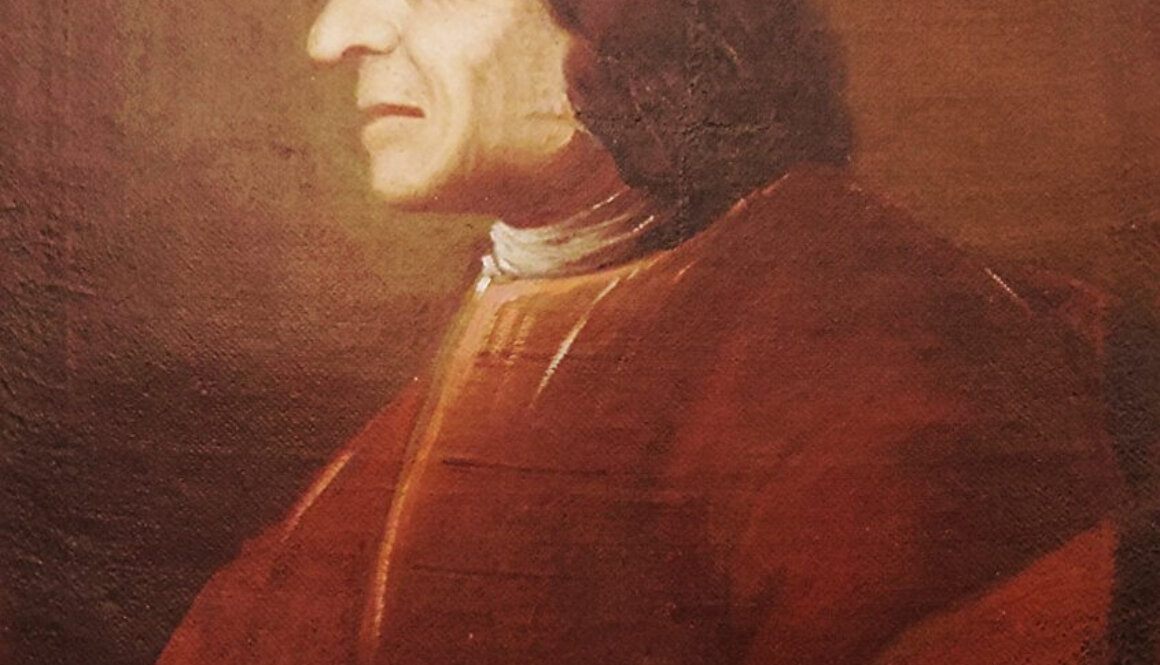
Jean-Baptiste Lully, born Giovanni Battista Lulli, was an Italian-French composer, dancer, and instrumentalist, celebrated as a master of French Baroque music. He was born on November 28 or 29, 1632, in Florence. Lully became a French subject in 1661 and worked at the court of Louis XIV. He was a close friend of playwright Molière, collaborating on many comédie-ballets, including his famous work, Le Bourgeois gentilhomme. Lully’s music is known for its lively rhythms and emotional depth, reflecting the characteristics of Baroque music. He introduced new dance forms and combined theatre with music, creating a unique genre. His operas, such as Armide, showcased his innovative style and contributed significantly to the development of French opera. Lully’s influence extended beyond his lifetime, shaping the future of orchestral music. He died on March 22, 1687, from gangrene after an accident during a performance. Lully’s legacy continues to be celebrated, as he is remembered for his contributions to music and the arts in the royal court of France.
*Old Style (O.S.) and New Style (N.S.) indicate dating systems before and after a calendar change, respectively. Usually, they refer to the change from the Julian calendar to the Gregorian calendar as enacted in various European countries between 1582 and 1923.
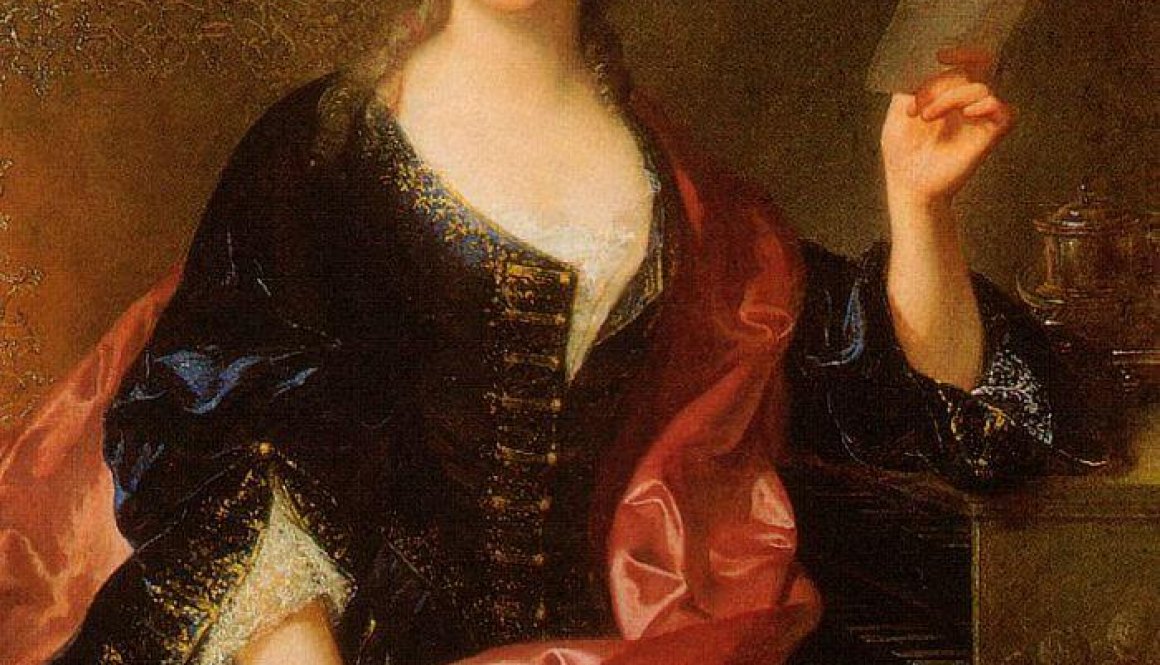
Élisabeth-Claude Jacquet was born into a family of musicians in Paris. Her father, Claude, taught her music, and at just five years old, she performed for Louis XIV at Versailles. This led to her becoming a musician in the royal court. In 1684, she married organist Marin de La Guerre. Jacquet de La Guerre was one of the few female composers of her time, composing in various forms, including sonatas and operas. Her first published work, Premier livre de pièces de clavessin, appeared in 1687. In 1694, she produced her opera, Céphale et Procris, the first opera by a woman in France. Although it received limited performances, her compositions were innovative. She blended French and Italian styles, influencing future music. Despite personal tragedies, including the loss of her son and husband, she continued to compose. Her later works, such as the Cantates Bibliques, reflect her creativity. Jacquet de La Guerre’s legacy as a pioneering female composer continues to inspire musicians today.
Georg Philipp Telemann was a German Baroque composer born on 24 March 1681. He is known as one of the most prolific composers in history, with over 3,000 compositions. Telemann was largely self-taught and pursued music against his family’s wishes. He studied in Magdeburg, Zellerfeld, and Hildesheim, eventually attending the University of Leipzig to study law. However, he chose a career in music, becoming a musical director in several cities, including Hamburg. Telemann’s music blends French, Italian, and German styles, showcasing his versatility. He composed many sacred cantatas and instrumental works, influencing the transition from Baroque to Classical music. Despite personal struggles, including the deaths of his wives and financial difficulties, Telemann remained dedicated to his craft. His works were highly regarded during his lifetime, and he was compared to famous contemporaries like Bach and Handel. Today, Telemann’s music is celebrated for its richness and complexity, reflecting the diverse influences of his time. The Telemann Museum in Hamburg honours his legacy, ensuring his contributions to music are remembered.
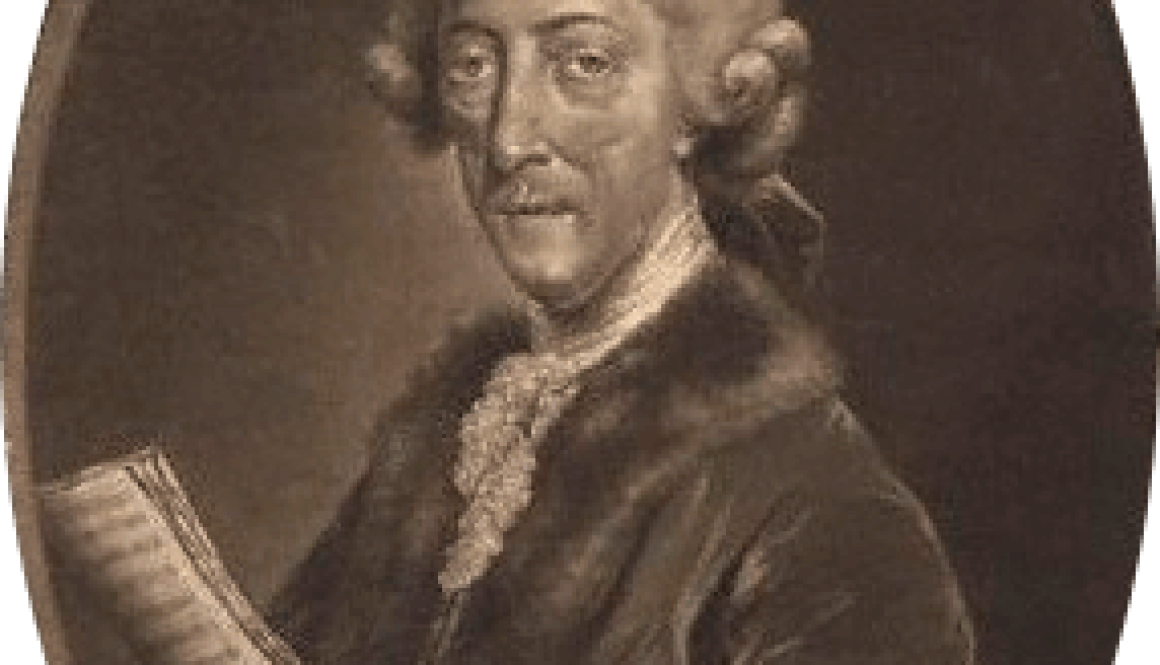
Thomas Augustine Arne was an English composer born in Covent Garden. He is best known for his patriotic song “Rule, Britannia!” and the nursery rhyme “A-Hunting We Will Go.” Arne was a leading figure in 18th-century British theatre, creating music for around 90 stage works, including operas, plays, and pantomimes. He was educated at Eton College and had a passion for music from a young age. Arne often practiced secretly at night, showing his dedication. His sister, Susannah, was a famous singer who performed in his works. Arne’s operas, such as “Artaxerxes,” were significant in the development of English opera. He introduced women’s voices into choruses and was one of the first composers to address copyright issues legally.
Throughout his life, Arne received support from influential patrons, including Frederick, Prince of Wales. He passed away on 5 March 1778 and is buried at St Paul’s in Covent Garden. Today, Arne is celebrated as one of Britain’s greatest theatrical composers, leaving a lasting legacy in music.
Antonio Lucio Vivaldi was an Italian Baroque composer, virtuoso violinist, and opera impresario, known for shaping the solo concerto into a dominant musical form. His influence spread widely across Europe during his lifetime, inspiring many imitators and advancing orchestration, violin technique, and programmatic music. Born in Venice, Vivaldi was baptised immediately after birth, likely due to fragile health. He trained for the priesthood from age 15 and was ordained in 1703, earning the nickname “il Prete Rosso” (“the Red Priest”) for his red hair. Much of Vivaldi’s career centred on the Ospedale della Pietà, an institution that educated girls in music. He taught and composed extensively for its musicians. His breakthrough came with the concerto collection L’estro armonico, published in 1711. In the 1720s, he composed his most famous work: The Four Seasons, which depicts vivid seasonal scenes, each linked to a descriptive sonnet. Vivaldi died in poverty in 1741, but his music experienced a revival in the 20th century. Today, The Four Seasons remains one of the most performed Baroque works.
George Frideric Handel was a German-born Baroque composer who settled in London in 1712 and became a naturalised British subject in 1727. He is celebrated for his Italian operas, English oratorios, anthems, concerti grossi, and organ concertos. Influenced by German choral traditions and the Italian Baroque, he helped shape “high Baroque” music, elevating Italian opera in England and establishing the English oratorio tradition. Major works still widely performed include Messiah, Water Music, Music for the Royal Fireworks, and the coronation anthem Zadok the Priest, used at every British coronation since 1727. Born in Halle, Handel received early training from organist Friedrich Wilhelm Zachow, then worked in Hamburg’s opera scene. He travelled to Italy, where he gained acclaim and produced successful operas. After moving to London, he achieved major success with Rinaldo and became a leading figure in the city’s operatic life. Facing financial pressures in the 1730s, he shifted focus to English choral works, creating landmark oratorios such as Saul, Israel in Egypt, and Samson. In later life, he became blind.