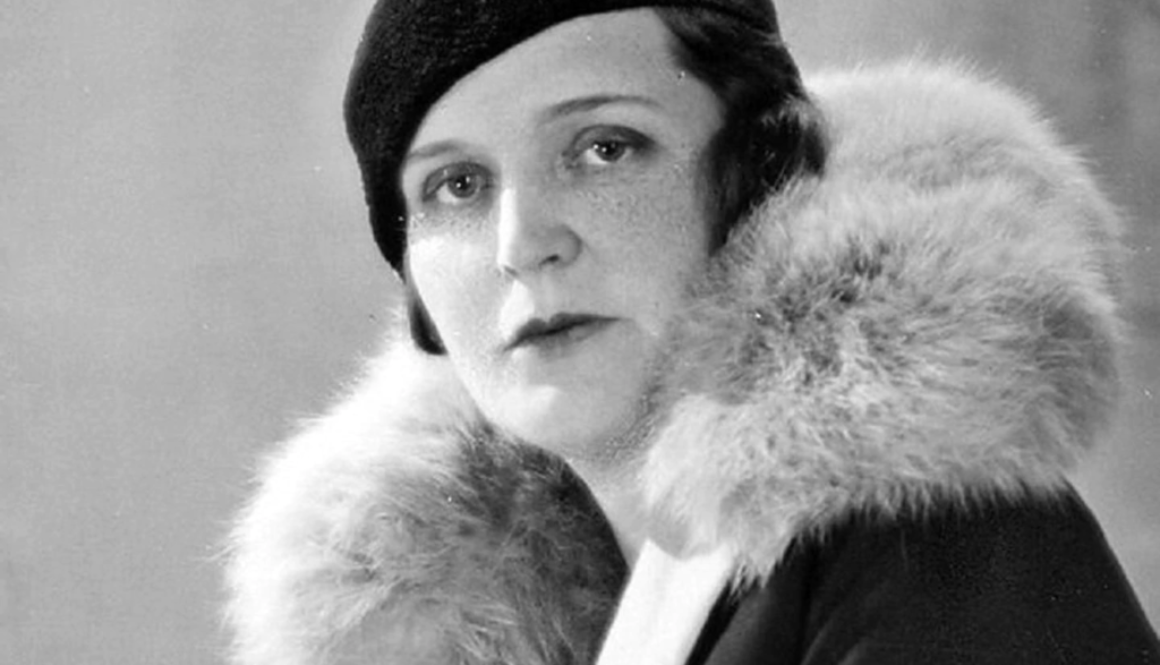
March 30th: Els Aarne
Els Aarne 30 March 1917 – 14 June 1995
Ballad for piano and orchestra
Via http://entsyklopeedia.ee/meedia/aarne_els1/aarne_els
Explore female composers from across history, ideal for KS2 and KS3 music lessons, assemblies and classroom listening.
This collection includes composers from different periods and styles, helping pupils develop a broader understanding of music.
Each composer page includes a short biography, listening ideas and links to classroom resources.
Elizabeth Maconchy – Facts for Kids (KS2, KS3 & KS4)
Elizabeth Maconchy was a British composer known for her powerful string quartets. This page is part of our Composer of the Day series, designed for classroom music listening and learning.
Listen to her music and explore more below.
Dame Elizabeth Violet Maconchy LeFanu DBE was an English-Irish composer. She is regarded as one of the finest composers from Great Britain and Ireland. Born in Broxbourne, Hertfordshire, to Irish parents, Maconchy grew up in both England and Ireland. Her family moved to Ireland in 1917, where she began her musical studies. At sixteen, she enrolled at the Royal College of Music in London, studying under notable composers. Maconchy faced challenges as a female composer in a male-dominated field. She produced over 200 works, including string quartets and operas, showcasing her unique style influenced by Béla Bartók. Her string quartets are particularly celebrated, as they reflect a dialogue between individual voices. Maconchy was also an advocate for women in music, helping to organise concerts for new composers. Throughout her life, she received numerous awards, including being made a Dame Commander of the Order of the British Empire. Maconchy’s legacy continues to inspire musicians today, highlighting the importance of creativity and perseverance in the arts.
Listen to String Quartet No. 3.
Think about:
This biography links directly to our reading comprehension resources, designed for KS2 and KS3 classrooms.
Élisabeth-Claude Jacquet was born into a family of musicians in Paris. Her father, Claude, taught her music, and at just five years old, she performed for Louis XIV at Versailles. This led to her becoming a musician in the royal court. In 1684, she married organist Marin de La Guerre. Jacquet de La Guerre was one of the few female composers of her time, composing in various forms, including sonatas and operas. Her first published work, Premier livre de pièces de clavessin, appeared in 1687. In 1694, she produced her opera, Céphale et Procris, the first opera by a woman in France. Although it received limited performances, her compositions were innovative. She blended French and Italian styles, influencing future music. Despite personal tragedies, including the loss of her son and husband, she continued to compose. Her later works, such as the Cantates Bibliques, reflect her creativity. Jacquet de La Guerre’s legacy as a pioneering female composer continues to inspire musicians today.
Lili Boulanger was a French composer and musician, the first woman to win the Prix de Rome for composition in 1913 with her cantata Faust et Hélène. She was the younger sister of Nadia Boulanger, a celebrated composer and teacher, and the daughter of composer Ernest Boulanger. Lili showed remarkable musical talent from an early age, absorbing Conservatoire-level learning while accompanying Nadia to lessons. Unfortunately, chronic illness disrupted her education and shortened her life. She studied at the Paris Conservatoire, supported by Nadia. In 1912, Lili attempted the Prix de Rome but collapsed during performances. In 1913, at nineteen, she won first prize, a landmark achievement for women in music. During World War I, she and Nadia organised support for soldiers and Conservatoire networks. Lili’s musical style features lush harmony and sensitive orchestration, blending influences from composers like Fauré and Debussy. Key works include Faust et Hélène, Psaume 130, and Pie Jesu. Her legacy continues through the Lili Boulanger Memorial Fund, promoting women composers and recognising her contributions to music history.
Amy Woodforde-Finden was a composer who is best known for writing the music to “Kashmiri Song” from Four Indian Love Lyrics by Laurence Hope. Amy Woodforde-Finden, born Amelia Rowe Ward in 1860 in Valparaíso, Chile, was the youngest daughter of American parents. After her father’s death, her mother moved the family to London, where Amy developed a talent for music. She studied under notable teachers and began composing. At 34, she married Brigade-Surgeon Woodforde-Finden and lived in India, where she created her famous works, including “Kashmiri Song” in 1902. Her music combined British sensibilities with Asian influences, reflecting the romanticism of her time. In 1916, she faced personal tragedy with her husband’s death, yet her music continued to be celebrated, even appearing in films. Woodforde-Finden’s compositions, while once popular, have been critiqued for their exoticism. Despite this, her melodies and themes of love and longing resonate with audiences. She passed away in 1919, leaving a legacy that continues to inspire musicians today, including the establishment of a music festival in her honour in 2022.
“The March of the Women” is a powerful song composed by Ethel Smyth in 1910, with words by Cicely Hamilton. It became the anthem of the Women’s Social and Political Union (WSPU) and the women’s suffrage movement in the United Kingdom. Activists sang it at rallies and even in prison during hunger strikes, showcasing their determination for equal rights. Smyth based the melody on a traditional tune from Abruzzo, Italy, dedicating it to the WSPU. The song was first performed on 21 January 1911 by the Suffrage Choir in London. Emmeline Pankhurst introduced it as the WSPU’s official anthem. The song was significant during protests, including a famous performance in 1912 at Holloway Prison, where women activists sang while imprisoned. The march was also used in a large demonstration in Washington, D.C., in 1914. Smyth created various arrangements, including for choir and orchestra. The song remains a symbol of women’s rights and the ongoing fight for equality, inspiring future generations to advocate for social change.
Margaret Bonds was an influential American composer, pianist, and teacher born in Chicago. She was one of the first Black composers to gain recognition in the United States. Bonds is best known for her arrangements of African-American spirituals and her collaborations with poet Langston Hughes. Notably, she was the first African American woman to perform with the Chicago Symphony Orchestra. Bonds faced many challenges throughout her life, including racial discrimination in her education at Northwestern University. Despite these obstacles, she earned her Bachelor and Master of Music degrees. After moving to New York, she continued to compose and perform, creating significant works like “The Ballad of the Brown King.”
In 1967, she moved to Los Angeles, where she taught music and composed for theatre. Tragically, Bonds died of a heart attack in 1972. Her legacy includes promoting African-American music and addressing social issues through her compositions, making her a vital figure in American music history.
Ruth Dorothy Louisa (“Wid”) Gipps MBE was an influential English composer, oboist, pianist, conductor, and educator. Born in 1921, she created a diverse range of music, including five symphonies and seven concertos. Gipps founded the London Repertoire Orchestra and the Chanticleer Orchestra, significantly impacting music education. She was awarded an MBE in 1981 for her contributions to music. From a young age, Gipps showed exceptional talent, performing publicly at just four years old. She studied at the Royal College of Music and later at Durham University, where she earned a doctorate in music. Gipps faced challenges in her career, including discrimination, which shaped her determination to succeed. She became a prominent figure in conducting, establishing orchestras that showcased new works. Gipps’ music is known for its rich instrumental colour and reflects influences from her teachers, including Vaughan Williams. Despite her achievements, her music was often overlooked in her lifetime. Gipps’ legacy continues to inspire future generations of musicians, particularly women in the arts, highlighting her role in advocating for female composers.
Anna Phoebe McElligott is a talented London-based violinist, composer, and broadcaster. She performs in various musical genres, including contemporary classical, rock, folk, jazz, Celtic, and Middle Eastern music. Anna was born in Hamburg, Germany, to a Greek-Irish father and a German mother. She moved to Manchester at age four and later lived in Michigan before settling in St Andrews, Scotland.
Anna began playing the violin at seven, encouraged by her mother. She studied social policy at the London School of Economics and worked with Labour Party politicians.
After university, Anna became a session musician, collaborating with many famous artists, including Sean Combs and George Michael. A significant moment in her career was joining the Trans-Siberian Orchestra in 2003, where she toured extensively across the USA. Anna has also released solo albums and formed the duo AVAWAVES.
Loreena McKennitt is a talented Canadian singer-songwriter and composer born on February 17, 1957. She creates world music that blends Celtic and Middle Eastern influences, showcasing her clear soprano vocals. McKennitt has sold over 16 million records globally. Born in Morden, Manitoba, she grew up in a family with Irish and Scottish roots, which inspired her love for music. Initially, she studied to become a veterinarian but discovered folk music while at university. After performing at the Winnipeg Folk Festival in 1974, she developed a passion for Celtic music and learned to play the Celtic harp. McKennitt’s first album, Elemental, was released in 1985, followed by several successful albums. Her music often features themes of nature, mythology, and spirituality. McKennitt faced personal tragedy in 1998, which led her to reduce public performances. However, she returned to music in 2006 with the album An Ancient Muse. Today, she continues to tour and create music that reflects her cultural heritage and artistic vision. Her work has significantly influenced contemporary music.