April 4th: Braulio Dueño Colón
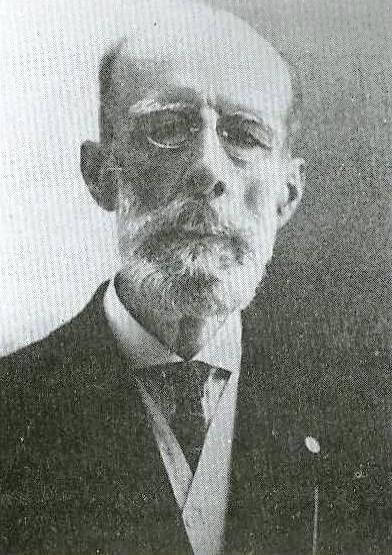
Braulio Dueño Colón 26 March, 1854 – 4 April 1934
Teresa
Public Domain, https://en.wikipedia.org/w/index.php?curid=2472229
Modest Petrovich Mussorgsky was a Russian composer from the Romantic era and a member of “The Five”, a group that aimed to create a uniquely Russian style of classical music. He was known for rejecting Western musical conventions in favour of realism, Russian speech rhythms, and themes from history and folklore. His most famous works include the opera Boris Godunov, the orchestral piece Night on Bald Mountain, and the piano suite Pictures at an Exhibition. Many of his compositions were not widely performed during his lifetime and were often revised by other composers like Nikolai Rimsky-Korsakov. Mussorgsky was born into a wealthy family in the Pskov region and began piano lessons as a child. He entered military training but left to pursue music. In Saint Petersburg, he met influential figures who shaped his artistic direction. Mussorgsky aimed to reflect life “as it is truly lived”, particularly through natural vocal writing. His later life was marked by instability and alcoholism, yet he produced powerful works. He died in 1881 at 42 and is remembered for his originality and bold musical language.
*Old Style (O.S.) and New Style (N.S.) indicate dating systems before and after a calendar change, respectively. Usually, they refer to the change from the Julian calendar to the Gregorian calendar as enacted in various European countries between 1582 and 1923.
Sergei Rachmaninoff was a renowned Russian composer, virtuoso pianist, and conductor, celebrated as one of the last great Romantic composers. Born into an aristocratic family, he displayed remarkable musical talent from a young age, starting piano lessons at four. He trained at the Moscow Conservatory, graduating with highest honours after composing his opera Aleko at nineteen. Rachmaninoff faced a significant setback when his Symphony No. 1 premiered disastrously in 1897, leading to years of depression and writer’s block. With therapy, he recovered and created his beloved Piano Concerto No. 2. He composed three more piano concertos, the Rhapsody on a Theme of Paganini, three symphonies, and choral works like the All-Night Vigil. His music is known for sweeping melodies, rich harmonies, and emotional depth. After the Russian Revolution in 1917, he moved to the United States, focusing on his concert career while composing Symphony No. 3 and Symphonic Dances. Rachmaninoff passed away in California in 1943, remembered as a brilliant pianist and composer whose music embodies deep emotion and technical brilliance.
*Old Style (O.S.) and New Style (N.S.) indicate dating systems before and after a calendar change, respectively. Usually, they refer to the change from the Julian calendar to the Gregorian calendar as enacted in various European countries between 1582 and 1923.
Nikolai Rimsky-Korsakov was a Russian composer and a key member of The Five, a group focused on developing a unique Russian classical style. He is celebrated for his vibrant orchestral pieces, such as Scheherazade, Capriccio Espagnol, and the Russian Easter Festival Overture, along with many operas. His music often features fairy-tale, folk, and exotic themes, a style known as musical orientalism. Initially, Rimsky-Korsakov had limited formal training but was influenced by Mily Balakirev and his fellow composers. In 1871, he became a professor at the Saint Petersburg Conservatory, where he recognised his technical weaknesses and dedicated himself to studying harmony and orchestration. This self-study allowed him to blend nationalist ideas with Western techniques, earning him fame for his orchestration skills. He also served in the Russian navy, enhancing his knowledge of instruments. In 1905, he supported student protests and faced dismissal. His opera The Golden Cockerel faced censorship. He died in 1908, leaving a lasting impact on Russian classical music and its identity.
William Henry Monk (16 March 1823 – 1 March 1889) was an English organist, Anglican church musician, and music editor who composed popular hymn tunes, including “Eventide”, used for the hymn “Abide with Me”, and “All Things Bright and Beautiful”. Monk was born in Brompton, London, and studied music under several teachers. He served as organist and choirmaster at various churches and became choirmaster at King’s College London, where he developed an interest in plainchant. In 1852, he was appointed organist at St Matthias’ Church, Stoke Newington, where he arranged hymns and wrote his own melodies. In 1857, Monk became the musical editor of Hymns Ancient and Modern, a significant hymn book that included many of his compositions. He also taught vocal studies at King’s College and other music schools. Monk married Hope Pillow and had a daughter, Florence, who sadly died young. This loss inspired him to compose “Eventide”. Monk passed away in 1889 and is buried in Highgate Cemetery, London.