
Bartolomeo Cristofori 4 May 1655 – 27 January 1731
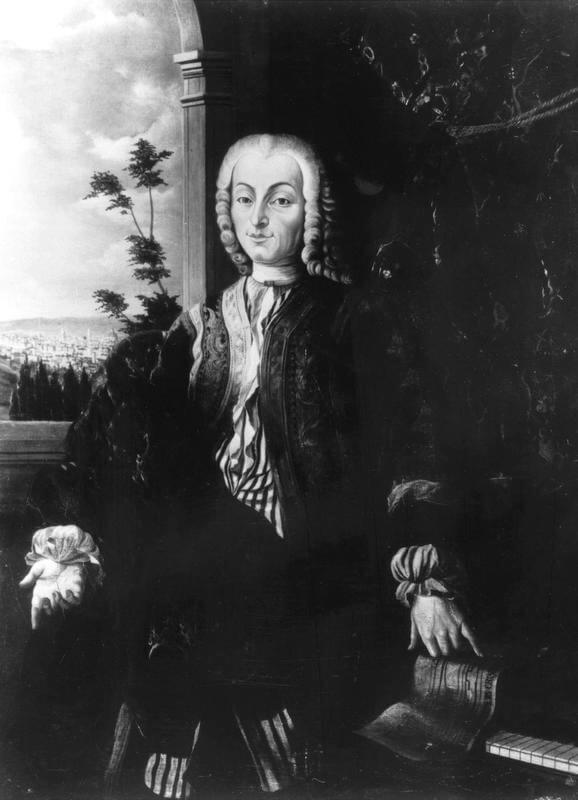
By Unknown author – Digital reproduction or scan of portrait from mechanical copy of portrait.Under US laws mechanical reproduction of a work does not create an additional copyright to that of the original., Public Domain, https://commons.wikimedia.org/w/index.php?curid=116459183
Bartolomeo Cristofori was an Italian instrument maker born in 1655 in Padua. He is most famous for inventing the piano, an instrument that has become very popular across the world. Before the piano, musicians used keyboard instruments like the harpsichord and organ, which produced sound in a different way. Cristofori aimed to create an instrument that could play both loudly and softly, allowing for greater expression in music.
Cristofori’s first pianos, known as ‘gravicembalo col piano e forte’, were made around the year 1700. The name means ‘harpsichord with soft and loud’, highlighting its ability to create a range of sounds. His design used hammers that struck the strings when the keys were pressed, a method that was new at the time. This innovation changed music forever.
Cristofori’s work was not widely known during his lifetime, but it influenced many musicians. Today, the piano is a crucial part of classical, jazz, and popular music, celebrating Cristofori’s genius.
Lodovico Giustini 12 December 1685 – 7 February 1743
Sonata number 6
Lodovico Giustini was an Italian composer and keyboardist born in 1685 in the town of Arezzo, Italy. He is best known for his contributions to the music of the harpsichord, an important instrument during the Baroque period. Giustini spent much of his life in Florence, where he composed numerous works that showcased his talent.
One of his most famous compositions is the “Sonate da Cimbalo,” a collection of sonatas written for the harpsichord. These pieces are unique because they combine beautiful melodies with intricate harmonies, making them a joy for musicians to play. Giustini’s work was influential, inspiring other composers of his time and helping to shape music in Italy.
Although not as famous as some of his contemporaries, Giustini’s music is celebrated especially among harpsichord players today. His compositions continue to be performed and studied, reflecting his lasting impact on the world of classical music.