William Pefro Rowlands
19 April 1860 – 22 October 1937
Blaenwern
William Penfro Rowlands From https://viscountorgans.net/wp-content/uploads/2016/07/William-Penfro-Rowlands.jpg
William Penfro Rowlands was born on the 19th April 1860 in Llys y Frân, a small village in Pembrokeshire, Wales. He was both a composer and a schoolteacher. Rowlands adopted ‘Penfro’ as his middle name to honour his native country. From an early age, he showed great talent in music. At the age of 17, he became the precentor of the Calvinistic Methodist Chapel at Gwastad.
Rowlands secured a teaching position at Pentre-poeth Boys’ School, which he held until 1881. He then moved to Morriston, where he also served as precentor at Bethania Chapel and later at the Tabernacle Independent Chapel from 1892 to 1919. During this time, he conducted the choir of Morriston United Choral Society for many years.
Rowlands is best known for composing the hymn tune Blaenwern in 1905, inspired by Blaenwern Farm, where he recuperated. This tune is often used for the hymn “Love Divine, All Loves Excelling,” and has been featured in many weddings.
Stephen Warbeck From https://www.worldsoundtrackawards.com/events/film-music-seminar-with-stephen-warbeck
Stephen Warbeck, born on 21st October 1953 in Southampton, is an accomplished English composer, celebrated for his film and television scores. He first gained recognition for his music in the popular series Prime Suspect, but his most notable achievement came when he won an Oscar for his score in the film Shakespeare in Love. This remarkable work also earned him the Drama Desk Award for Outstanding Music in a Play in 1994.
Warbeck studied at Bristol University and initially began his professional journey as an actor. He is skilled in playing the accordion and co-leads a music group called The hKippers with Paul Bradley. In 2018, he expanded his talents by directing his first feature film, The Thin Man, later retitled The Man in the Hat in France, featuring actors Ciarán Hinds and Stephen Dillane.
His impressive filmography includes scores for notable films like Billy Elliot, Captain Corelli’s Mandolin, and A Christmas Carol.
Thomas Newman By Simon Fernandez, CC BY 2.0, https://commons.wikimedia.org/w/index.php?curid=15781298
Thomas Montgomery Newman, born on 20th October 1955, is a renowned American composer, conductor, and orchestrator. He is celebrated for his film scores, winning six Grammy Awards, an Emmy Award, and two BAFTA Film Awards, alongside 15 Academy Award nominations. Over more than 40 years, Newman has composed for numerous films, including The Shawshank Redemption, American Beauty, and Finding Nemo. His music often enhances the emotional depth of the films he works on.
Newman’s journey began in Los Angeles as part of a famous film-scoring family. His father, Alfred Newman, won multiple Academy Awards for his music. Thomas studied at the University of Southern California and Yale University, where he was mentored by composer Stephen Sondheim. Initially more interested in musical theatre, Newman transitioned to film under the guidance of family and friends in the industry. Today, he is known for his unique sound, often incorporating unusual instruments into his scores, sparking interest and intrigue in the cinematic experience.
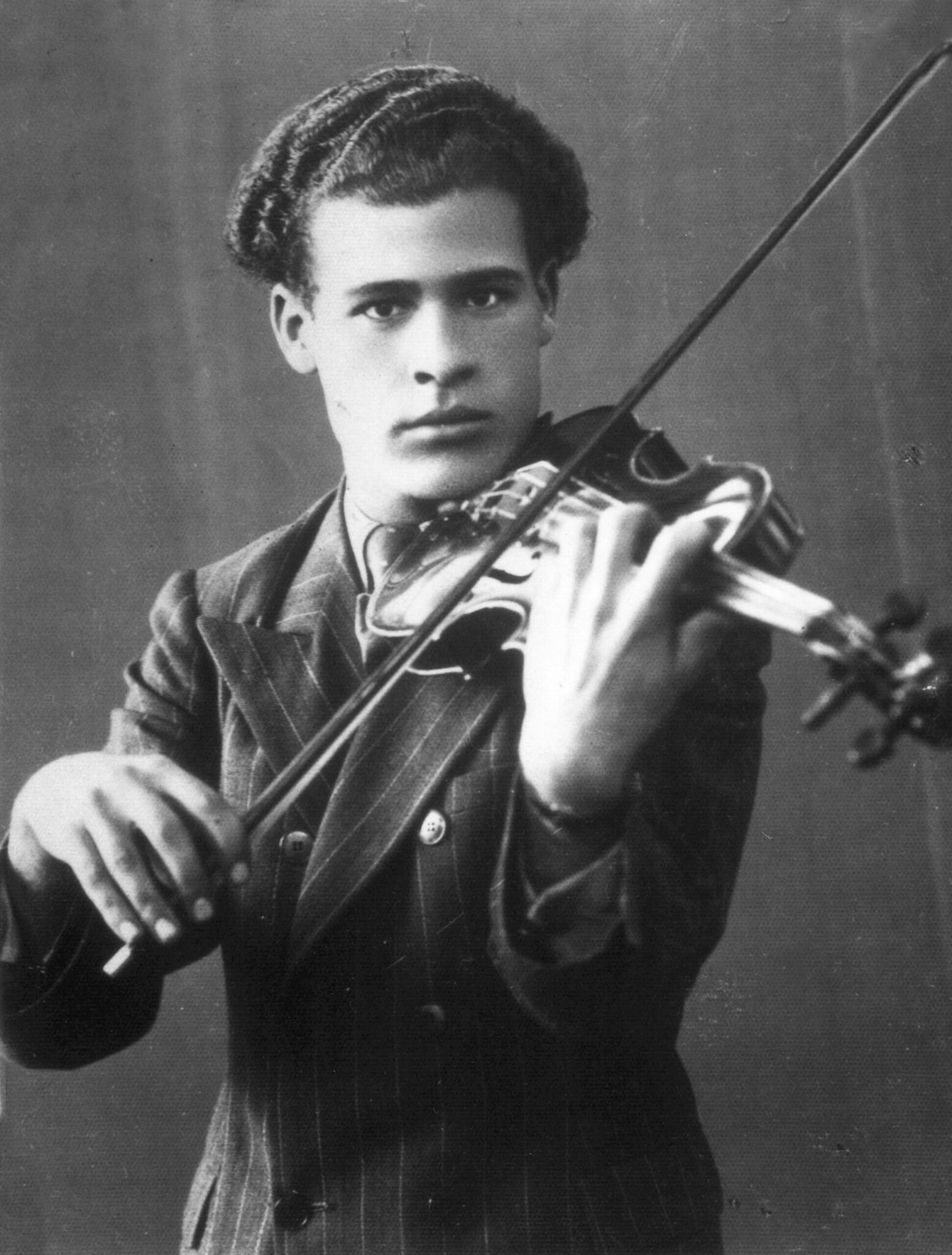
Mahmoud Zoufonoun
1 January 1920 – 19 October 2013
Pessaram Amin
For my son, Amin
Mahmoud Zoufonoun Public Domain, https://commons.wikimedia.org/w/index.php?curid=737150
Charles-François Gounod, born on 17 June 1818 in Paris, was a renowned French composer. He is best known for his operas, particularly “Faust,” which premiered in 1859 and became hugely popular, and “Roméo et Juliette,” composed in 1867. Gounod’s work was influenced by his artistic family and his studies at the Conservatoire de Paris, where he won the prestigious Prix de Rome, enabling him to study in Italy and Germany. His religious convictions also shaped his music, leading him to compose many church hymns, including his famous “Ave Maria.”
In 1870, during the Franco-Prussian War, Gounod moved to England for safety. Although he returned to France after the war, he spent significant time in London and worked with various musicians. Despite his earlier successes, Gounod struggled to adapt to changing musical tastes later in life. He continued to compose until his death on 18 October 1893.
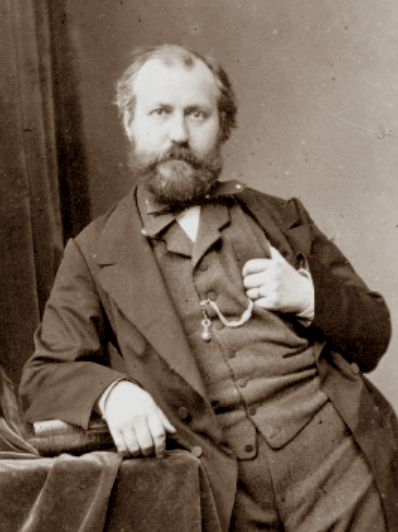
Charles Gounod By Bayard & Bertall – Bibliothèque nationale de France, département Musique, PD-US, https://en.wikipedia.org/w/index.php?curid=62431977
Charles-François Gounod, born on 17 June 1818 in Paris, was a renowned French composer. He is best known for his operas, particularly “Faust,” which premiered in 1859 and became hugely popular, and “Roméo et Juliette,” composed in 1867. Gounod’s work was influenced by his artistic family and his studies at the Conservatoire de Paris, where he won the prestigious Prix de Rome, enabling him to study in Italy and Germany. His religious convictions also shaped his music, leading him to compose many church hymns, including his famous “Ave Maria.”
In 1870, during the Franco-Prussian War, Gounod moved to England for safety. Although he returned to France after the war, he spent significant time in London and worked with various musicians. Despite his earlier successes, Gounod struggled to adapt to changing musical tastes later in life. He continued to compose until his death on 18 October 1893.
12 Études: No. 1 in A-Flat Major "Aeolian Harp"
Op. 25
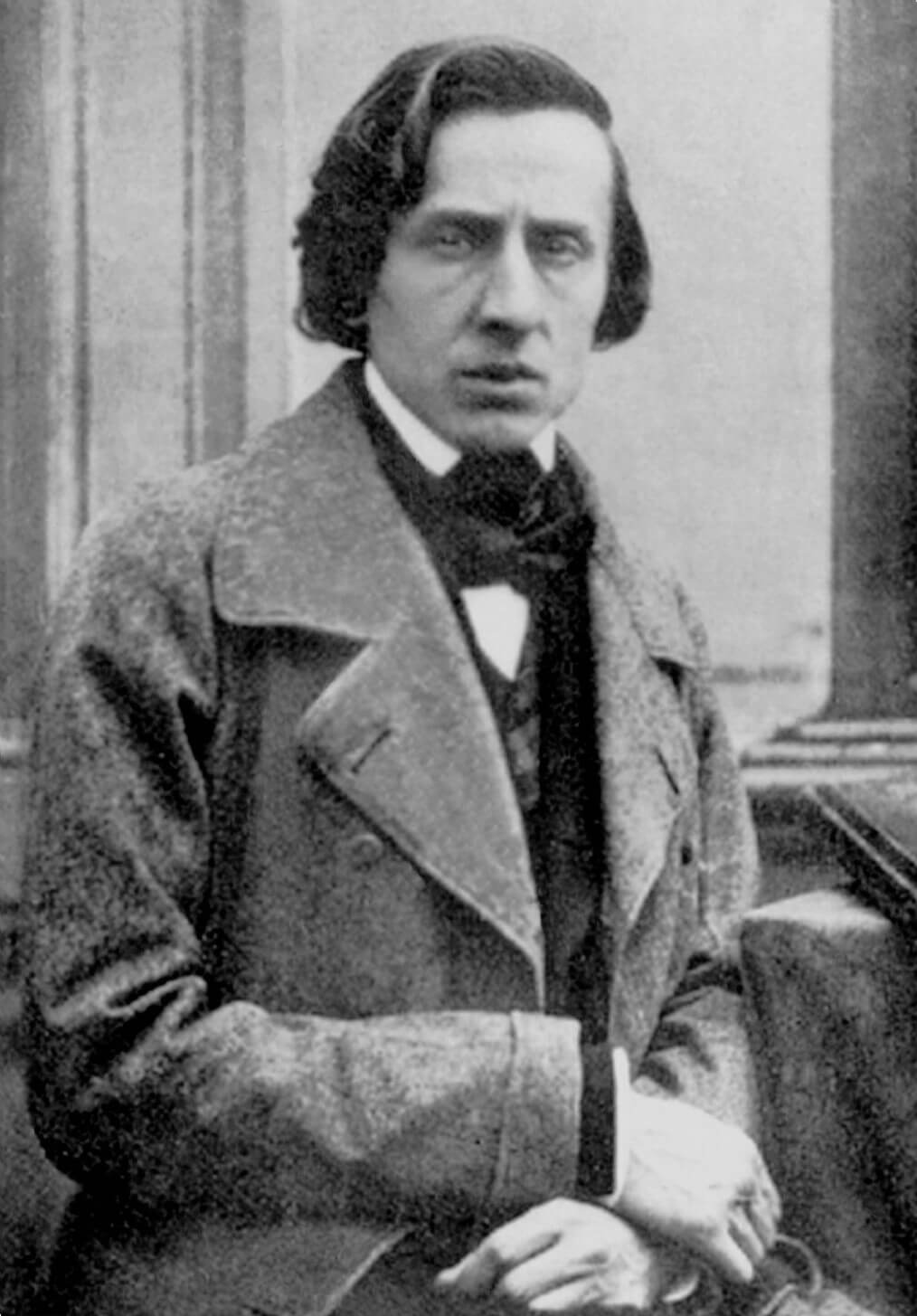
Frédéric Chopin By Louis-Auguste Bisson – Ernst Burger: Frédéric Chopin. München 1990, S. 323, Public Domain, https://commons.wikimedia.org/w/index.php?curid=113046
Frédéric François Chopin was a famous Polish composer and pianist, born on 1 March 1810 in Żelazowa Wola. He is well-known for his exceptional talent in playing the piano and his influential contributions to Romantic music, primarily composing for solo piano. Chopin began exhibiting musical genius in childhood, giving public concerts by the age of seven. He moved to Warsaw, where he further developed his skills and began composing. At age 20, he left Poland and eventually settled in Paris, where he became an integral part of the artistic community.
Chopin preferred the intimate atmosphere of salons over large concert halls, only performing publicly a few dozen times. His compositions, such as mazurkas, waltzes, and nocturnes, reflect his Polish heritage and his unique emotional depth. He often drew inspiration from Polish folk music and the classical styles of composers like Mozart. Chopin’s powerful music and personal struggles with health and love left a lasting impact, making him one of the most celebrated composers in history.
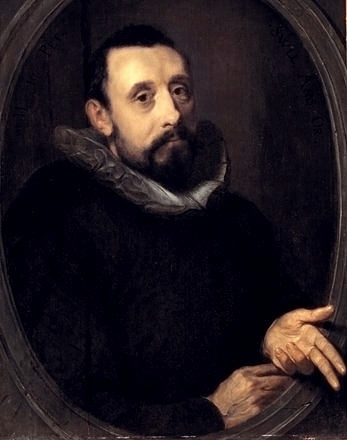
Jan Pieterszoon Sweelinck
April or May, 1562 – 16 October 1621
Fantasia Cromatica
Jan Pieterszoon Sweelinck By Gerrit Pietersz Sweelink – www.ahm.nl : Home : Pic, Public Domain, https://commons.wikimedia.org/w/index.php?curid=190535
Jan Pieterszoon Sweelinck was a Dutch composer and organist, born in 1562 in Deventer, Netherlands. His family moved to Amsterdam shortly after his birth. Sweelinck began lessons in music from his father, who was also an organist, but sadly, his father passed away when Sweelinck was only eleven. He studied under various teachers, including a Catholic pastor, until political changes led to the end of those lessons. By the age of 15, Sweelinck became the organist at the Oude Kerk, where he worked for the rest of his life. Alongside composing, he was a dedicated teacher and influenced many future organists. Sweelinck’s compositions include over 250 vocal works and innovative keyboard pieces. He was notably skilled at improvisation, earning him the nickname “Orpheus of Amsterdam.” Despite the restrictions of Calvinist worship, Sweelinck’s music thrived and was respected across Europe, impacting various religious traditions and future generations of musicians.
Kaikhosru Shapurji Sorabji
14 August 1892 – 15 October 1988
In The Hothouse
Kaikhosru Shapurji Sorabji
By Ernest Walter Histed (1862–1947) – https://www.facebook.com/KaikhosruShapurjiSorabji/photos/a.432765483491909/4063739087061179/?type=3&theater, Public Domain, https://commons.wikimedia.org/w/index.php?curid=113074947
Kaikhosru Shapurji Sorabji, born on 14 August 1892 in Essex, was a notable English composer, pianist, and music critic. His musical career spanned over seventy years, producing a vast array of works that included intricate piano compositions and lengthy symphonies. Best known for pieces like Gulistān and Villa Tasca, Sorabji’s music was often complex and renowned for its technical difficulties. Despite his reluctance to perform in public, he first showcased his works between 1920 and 1936.
Sorabji faced personal challenges, including feelings of alienation due to his mixed heritage and homosexuality. He was largely self-taught and initially inspired by modernist musicians. In the late 1930s, he withdrew from public performances, enforcing a self-imposed ban on his music that lasted until 1976. His later years were spent in Corfe Castle, Dorset, where he focused on composing and writing. His unique style combined various musical influences, contributing significantly to the 20th-century music scene.
Alexander von Zemlinsky
14 October 1871 – 15 March 1942
Ländliche Tänze
Op.1
Alexander von Zemlinsky By The original uploader was Eaaumi at German Wikipedia.(Original text: nicht bekannt) – http://www.alma-mahler.at/deutsch/almas_life/almas_life.html, Public Domain, https://commons.wikimedia.org/w/index.php?curid=3706399
Alexander Zemlinsky (14 October 1871 – 15 March 1942) was an influential Austrian composer, conductor, and teacher. Born in Vienna to a diverse family, his early life was shaped by his Jewish heritage, as his family converted to Judaism. He began studying the piano at a young age and later attended the Vienna Conservatory, where he excelled in music. Zemlinsky was mentored by esteemed composers such as Brahms and Bruckner. He formed a close friendship with Arnold Schoenberg, who would later become a famous composer himself.
Zemlinsky won acclaim for his musical compositions, including his opera “Es war einmal,” which was conducted by Gustav Mahler in 1900. Throughout his career, he composed various works, ranging from symphonies to chamber music. As a conductor, he was recognised for his interpretations of Mozart and Mahler. Unfortunately, Zemlinsky’s later years were overshadowed by the rise of the Nazi regime, forcing him to flee to New York, where he passed away in 1942, largely forgotten.
Gilberto Mendes By Dietrich Hilmi – Own work, CC BY-SA 3.0, https://commons.wikimedia.org/w/index.php?curid=75149203
Gilberto Mendes was a remarkable Brazilian composer born on 13 October 1922 in Santos, Brazil. He was known for his innovative approach to music and was one of the founders of New Consonant Music, a group that aimed to explore new sound possibilities. Mendes studied piano under Antonieta Rudge and harmony with Sabino de Benedictis, drawing inspiration from the famous composer Villa-Lobos.
His early works showcased the beginnings of bossa nova, and he was deeply influenced by the Noigandres poets, which helped shape his artistic vision. Mendes attended the Santos Conservatory from 1941 to 1948, later studying composition with renowned musicians. He participated in the Darmstadt International Summer Courses for New Music, where he learned from influential figures like Pierre Boulez.
In 1962, he founded the New Music Festival, promoting experimental music. Mendes created various compositions, including orchestral and chamber works.