
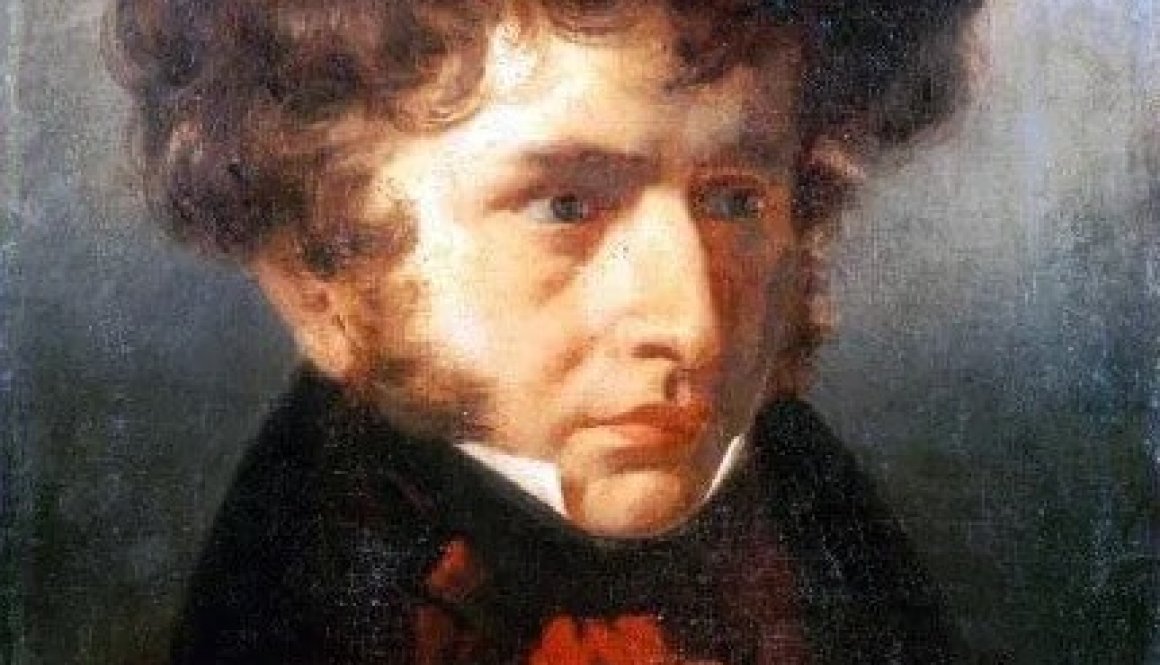
Hector Berlioz (1803 – 1869) – Symphonie fantastique: V: “Songe d’une nuit du sabbat” (Dream of a night of the sabbath)
Hector Berlioz 11 December 1803 – 8 March 1869
Symphonie fantastique: V: "Songe d'une nuit du sabbat" Dream of a night of the sabbath

http://www.hberlioz.com/Photos/BerliozPhotos1.html, Public Domain, https://commons.wikimedia.org/w/index.php?curid=2579665
The fifth movement of Hector Berlioz’s programme symphony is called Dream of a Night of the Sabbath. It portrays a terrifying dream in which ghosts, sorcerers and monsters gather for the artist’s funeral. Strange noises, moans, bursts of laughter and answering cries create an eerie atmosphere. The music begins slowly and ominously. Trembling strings, called tremolos, and plucked notes, called pizzicato, make the sound unstable. Strongly accented notes, or sforzandos, add sudden shocks.
Then the tempo becomes faster, and the metre changes to six eight. A clarinet presents the returning theme, but its former noble character has become a rough, grotesque dance. Bells suggest a funeral, while low bassoons play a solemn chant. Strings and brass build layers of sound, making the witches’ dance increasingly wild and chaotic. At the climax, the chant and dance combine. Changing tempo, volume, pitch and texture guide listeners towards the dramatic ending. Berlioz uses instrumental music to tell a story without words. Listeners can use these musical clues to imagine the scene and explain how each sound affects mood.