April 4th: Braulio Dueño Colón
Braulio Dueño Colón 26 March, 1854 – 4 April 1934
Teresa
Public Domain, https://en.wikipedia.org/w/index.php?curid=2472229
Samuel Barber was an American composer, pianist, conductor, baritone, and teacher, celebrated for music that largely favoured lyricism, emotional directness, and traditional tonal craft at a time when many composers pursued more experimental modernism. His formative training came from composition study at the Curtis Institute of Music, notably with Rosario Scalero, and long mentorship from his uncle, the song composer Sidney Homer. After 1940, Barber absorbed some modernist elements, including sharper dissonance and occasional tonal ambiguity, while keeping his characteristic melodic voice.
He wrote outstanding music across orchestral, chamber, and vocal genres, but vocal music dominates his catalogue, rooted in his own early career as a professional baritone and his lifelong sensitivity to text and the singing line. His best-known piece is Adagio for Strings (1936), later adapted as the choral Agnus Dei (1967). Other staples include Knoxville: Summer of 1915 (1947) and the Violin Concerto (1939). Barber won the Pulitzer Prize for Music twice: for the opera Vanessa (1958) and for the Piano Concerto (1962). He died of cancer in 1981.

John Philip Sousa was an American composer and conductor best known for U.S. military marches, earning the nickname “The March King.” His most famous works include “The Stars and Stripes Forever,” “Semper Fidelis,” “The Washington Post,” “The Liberty Bell,” and “The Thunderer.” He also helped popularise the sousaphone, a tuba designed for marching bands. Born in Washington, D.C., Sousa began music studies young, learning multiple instruments and showing talent. At 13, his father enlisted him as an apprentice in the United States Marine Band. Sousa left in 1875, worked as a violinist, and learned conducting. He returned in 1880 as director of the Marine Band, leading “The President’s Own” under five U.S. presidents. In 1892, Sousa formed the touring Sousa Band, which became famous, performing thousands of concerts. During World War I, he led a Navy band. Sousa died on 6 March 1932, after rehearsing “The Stars and Stripes Forever.” He is buried in Washington, D.C., where the Marine Band performs “Semper Fidelis” at his grave each year on his birthday.
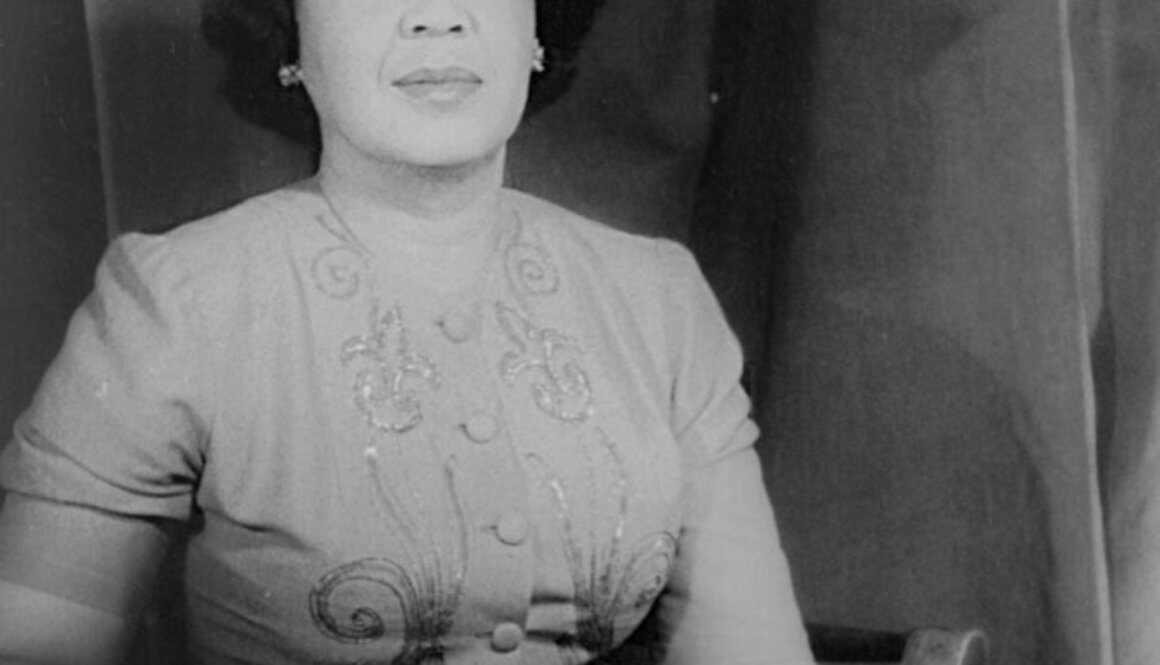
Margaret Bonds was an influential American composer, pianist, and teacher born in Chicago. She was one of the first Black composers to gain recognition in the United States. Bonds is best known for her arrangements of African-American spirituals and her collaborations with poet Langston Hughes. Notably, she was the first African American woman to perform with the Chicago Symphony Orchestra. Bonds faced many challenges throughout her life, including racial discrimination in her education at Northwestern University. Despite these obstacles, she earned her Bachelor and Master of Music degrees. After moving to New York, she continued to compose and perform, creating significant works like “The Ballad of the Brown King.”
In 1967, she moved to Los Angeles, where she taught music and composed for theatre. Tragically, Bonds died of a heart attack in 1972. Her legacy includes promoting African-American music and addressing social issues through her compositions, making her a vital figure in American music history.
Howard Harold Hanson was an influential American composer and educator, born on October 28, 1896, in Wahoo, Nebraska. His parents were Swedish immigrants, and he began studying music with his mother. Hanson attended Luther College and later the Institute of Musical Art, which became the Juilliard School. He earned his degree from Northwestern University in 1916. In 1924, he became the director of the Eastman School of Music, where he significantly enhanced the curriculum and promoted American classical music.
Hanson established the American Composers Orchestral Concerts and the Festivals of American Music, showcasing works by American composers. He won the Pulitzer Prize in 1944 for his Symphony No. 4 and received the George Foster Peabody Award in 1946. His compositions, including “Song of Democracy,” reflect his belief in emotional expression and the beauty of music. Hanson’s style is often associated with Neo-Romanticism, blending traditional and modern elements.
Rudolph Ganz was born in Zurich, Switzerland, and became a significant figure in music. He studied piano and composition, debuting with the Berlin Philharmonic Orchestra in 1899. In 1900, he moved to Chicago, where he joined the Chicago Musical College. Ganz was the first pianist to perform Maurice Ravel’s music in the United States, introducing new sounds to American audiences. He conducted the St. Louis Symphony Orchestra from 1921 to 1927, helping to create a new symphonic audience through innovative concerts.
He returned to Chicago Musical College, where he served as president for many years. Ganz promoted contemporary music and conducted orchestras, including the New York Philharmonic. He received the Légion d’honneur for introducing Claude Debussy and Ravel’s works to America. Throughout his life, he taught many students who became successful musicians. Ganz’s legacy includes his contributions to music education and the promotion of new music.
Morton Gould was an influential American composer, conductor, arranger, and pianist, born on December 10, 1913, in Richmond Hill, New York. He was recognised as a child prodigy, composing his first piece at just six years old. Gould studied at the Institute of Musical Art and was taught by notable instructors. During the Great Depression, he worked as a pianist in movie theatres and vaudeville acts. By 1935, he was conducting orchestral programmes for radio, reaching a national audience.
Gould created music for Broadway, film, and television, including the scores for “Billion Dollar Baby” and “World War One.” He received numerous accolades, including a Grammy Award and the Pulitzer Prize for Music in 1995 for his work “Stringmusic.” As a conductor, he led major orchestras across the globe and was known for blending various musical styles. Gould’s innovative approach to music included incorporating elements like tap dancing and rapping.
Loreena McKennitt is a talented Canadian singer-songwriter and composer born on February 17, 1957. She creates world music that blends Celtic and Middle Eastern influences, showcasing her clear soprano vocals. McKennitt has sold over 16 million records globally. Born in Morden, Manitoba, she grew up in a family with Irish and Scottish roots, which inspired her love for music. Initially, she studied to become a veterinarian but discovered folk music while at university. After performing at the Winnipeg Folk Festival in 1974, she developed a passion for Celtic music and learned to play the Celtic harp. McKennitt’s first album, Elemental, was released in 1985, followed by several successful albums. Her music often features themes of nature, mythology, and spirituality. McKennitt faced personal tragedy in 1998, which led her to reduce public performances. However, she returned to music in 2006 with the album An Ancient Muse. Today, she continues to tour and create music that reflects her cultural heritage and artistic vision. Her work has significantly influenced contemporary music.
John Coolidge Adams is an American composer and conductor known for his significant contributions to contemporary classical music. He is particularly recognised for his operas based on real historical events, along with major orchestral, choral, chamber, electronic, and piano works. Growing up in a musical family in New England, Adams studied at Harvard University. Initially, he was influenced by strict modernist music, but the writings of John Cage inspired him to explore new styles. After relocating to San Francisco, he became a prominent figure in the city’s new-music scene and taught at the San Francisco Conservatory. His minimalist style is evident in works like Phrygian Gates and Shaker Loops. Notable pieces such as Harmonium and Short Ride in a Fast Machine increased his national recognition. His opera Nixon in China, about Nixon’s 1972 visit, marked a collaboration with director Peter Sellars. Adams won the Pulitzer Prize for On the Transmigration of Souls, a tribute to 9/11 victims. His later operas include Doctor Atomic and Girls of the Golden West.
Frederick Loewe was a famous composer known for his Broadway musicals. Born in Berlin, Germany, he moved to America with his father, a Jewish operetta star. Loewe began playing piano at a young age and started composing songs by seven. He attended the Stern Conservatory in Berlin and became a concert pianist.
In New York, he struggled initially but found work in German clubs and silent films. Loewe met lyricist Alan Jay Lerner at the Lambs Club in 1942, and they collaborated on several successful musicals, including Brigadoon and My Fair Lady. Brigadoon, a romantic fantasy, won the New York Drama Critics’ Circle award for Best Musical.
Their adaptation of George Bernard Shaw’s Pygmalion, My Fair Lady, became a massive hit, winning the Tony Award for Best Musical. Loewe also worked on Camelot and the film Gigi, which won nine Academy Awards.